About the project

Our project

Showing posts with label 1700s. Show all posts

Friday, 25 July 2025

William Murdoch, Inventor

 by Roberta McGee

William Murdoch, the inventor of gas lighting, was born at Bello Mill, Lugar in 1754, the third child of John Murdoch and Anna Bruce. 

Father John was born in 1725 at Skerrington Mill, Cumnock. In 1747, when he married Anna Bruce, whose brother James was a land agent for the Dumfries Estate, John was in Orchard farm, Auchinleck. According to a Cumnock Chronicle report of 1975 he had previously joined the army  and fought in Flanders during the Austrian Succession War (1740-1748). He most likely would have fought at Dettingen under Lord Stair. Dettingen was the last time a British monarch led his troops into battle. Dettingen Wood, on the Dumfries Estate, commemorated this great battle of 1743. John also supported the Government Forces during the Jacobite Rebellion.

John and Anna and their family moved to Bello Mill, Lugar in 1754. They were tenants of James Boswell's Estate in Auchinleck. 

John was a farmer, millwright, miller and inventor, who, in 1760, invented the first iron-toothed pinion gear wheel to be made in Britain. Also, with the assistance of his son William, who showed signs of mechanical genius at an early age. 'made a wooden horse on wheels, on which, by the assistance of propelling poles, he used to visit Cumnock' (Source: The New History of Cumnock, John Strawhorn, p58) This pre-dated Kilpatrick MacMillan's first bicycle by about 75 years.

William Murdoch - Image wmgaz.pl


William Murdoch was schooled firstly in Cumnock and then in Auchinleck. He excelled at mathematics and the principles of mechanics under William Halbert, a well respected author of an arithmetic text book. He also assisted his father working in metal and wood. In addition he carried out experiments in coal gas using coal heated in a copper kettle in a small cave by the River Lugar near his father's mill. 

Entrance to Murdoch’s Cave - Image Wikimedia 


In 1777 he (purportedly) walked 300 miles from Lugar to Birmingham to find work at the Soho Works of James Watt and Matthew Boulton. James Boswell, the Murdoch's landlord, had made several visits to the Boulton and Watt factory and most likely gave him a letter of introduction. At first they were reluctant to employ him but then Boulton noticed his wooden hat made on a lathe of his own design. They were so impressed that they gave him a job. So began his career with Boulton and Watt who manufactured steam engines which were used to drain Cornish tin and copper mines. He moved quickly from making patterns for machine parts into fitting and erecting steam engines and also repairing and refining the ones which the company had installed at various pits and factories.  

In 1779 Murdoch was sent to Redruth in Cornwall as their agent and leading engineer where he was responsible for the erection, maintenance and repair of Boulton and Watt steam engines in the Cornish tin mines to make them more efficient at pumping water out of the mines. He was kept busy travelling around the area and, after being met with some hostility initially, because he had also been engaged by Boulton and Watt to make reports against competitors to determine whether patents had been infringed, he became very well respected there. 

On Christmas Eve 1785 William Murdoch married Anne Paynter at St. Mewan, Cornwall. Sadly, it was a short marriage as Anne died five years later following the birth of their son John. 

Whilst based in Redruth Murdoch spent his spare time at his home, Murdoch House, in Cross Street,working on an idea for a 'horseless carriage' known as The Murdoch Flyer. In 1794, in order to see properly, his spare time being in the evening, he illuminated his house with a gas that he had extracted from coal, also putting a lamp outside, thus making Cross Street the first street in the world to be lit by artificial light. The coal gas was generated in an iron retort at the bottom of his garden, then piped into his house, where he lit the rooms with a variety of burners. 

He built several working models of The Flyer, and it is said that he used to travel from mine to mine in a full-sized version which had a portable gas lantern. 

The Murdoch Flyer from original oil painting by Gordon Grogan

In 1795 he demonstrated methods for producing and storing gas at Neath Abbey, South Wales. Back in Birmingham he lit up the Soho factory in 1802 during the celebrations for the signing of the Treaty for  the peace of Amiens, and in 1816 he lit up his newly-built house at Sycamore Hill by gas supplied from the Soho factory. 

Throughout his time in Redruth and Birmingham Murdoch had made many inventions and improvements to the basic steam engine designs used by Boulton and Watt, who took the credit, their excuse being that Murdoch was their employee so whatever he invented while employed by them was, by rights, theirs. In 1786 Murdoch attempted to patent his steam carriage but was talked out of it by Boulton. His employers did all they could to discourage and hinder Murdoch from pursuing his experiments and, it has been argued, by removing evidence of the origin of some of the inventions they patented. Murdoch, however, was entirely loyal to their interests and he proved an invaluable help to Watt, becoming his right-hand man. 

In 1799 Murdoch invented a much simpler and more efficient steam wheel. This was an early version of the steam turbine. It allowed steam pressure to turn a wheel directly. By this time, Murdoch's contract had changed, and he could patent the device himself. 

Image - IQSdirectory.com

Murdoch is best known for being the inventor of gas lighting and inventing the first steam engine carriage in Britain. However, he had many other strings to his bow. Some other examples of his genius are: -
  • Sun and Planet Gear and D slide valve. The 'Sun and Planet Motion' which is included in Watt's patent of 1781 was contrived by Murdoch (Lives of Boulton & Watt 1874 p245)
  • Oscillating cylinder steam engine
  • Steam gun and steam cannon
  • Developed the pneumonic tube message system which worked by using compressed air to propel a message in a cylinder through a tube to its intended destination. It became used in big department stores.
  • Worked on one of the first British paddle steamers to cross the English Channel.
  • Iron cement used to fix and harden the joints of steam engines.
  • A special type of paint for ships' bottoms.
  • From 1784-1795 built working models of steam engines.
  • In 1795 he developed a replacement for isinglass which was used in the clarifying of beer to remove impurities. 
  • The bell crank engine
  • Making stone pipes (patent 1810). Sold to Manchester Stone Pipe Co. to supply the City with water.
  • Stone and wood borers
  • In 1807 designed and built the engine for the North River Steamboat, the first steamboat on the Hudson River.
  • In 1815 designed and installed the first modern gravity fed piped hot water system at The Royal Pump Rooms in Leamington Spa.
  • In 1817 he moved into a large new house which he had built in Sycamore Hill, outside Birmingham. The house had many innovative features such as gas lighting, a doorbell which worked with compressed air and an air conditioning system.
In 1808 Murdoch was awarded the Rumford Gold Medal, which bears the inscription Ex Fumo dare lucem, which translates as 'to give light from smoke'. This was for 'both the first idea of applying, and the first actual application of gas to economical purposes'.

In 1882 the National Gas Institute founded the Murdoch Medal which is awarded periodically to the authors of useful inventions connected with gas making. 

The town of Redruth holds an Annual Murdoch Day in June. In 2007, they had a parade and the first public journey of a full-sized working copy of Murdoch's Steam Carriage. The whole day is dedicated to the legacy of his creativity and innovation. Thousands of people flock into the town for the festival with street entertainment, workshops, food, street stalls, steam engines, a traditional fairground and the Murdoch Day Parade. (Source: Celebrating Murdoch Day - Discover Redruth)


William Murdoch died 15 November 1839 at his Birmingham home and was buried in St Mary's Churchyard, Handsworth, Staffordshire, England near the graves of Watt and Boulton. There are statues of him at the Wallace Monument, Stirling and in Centenary Square, Birmingham. In 2019 William Murdoch was added to the Scottish Engineering Hall of Fame. A truly remarkable man.

Gilded bronze statue of Boulton, Watt and Murdoch in Centenary Square, Birmingham
Image - Wikimedia Creative Commons Attribution License


William Murdoch on the Cumnock Connections tree


Friday, 5 July 2024

The Ayr Bank Crash

 by Roberta McGee

Douglas, Heron & Company was a Scottish Bank with its Head Offices in Ayr. Also known as the Ayr Bank it had a small branch in Glaisnock Street, Old Cumnock. The bank opened in 1769 and folded in 1772, reopening briefly between September 1772 and August 1773, but on 12th August 1773 it was dissolved. 

The 1760s in Scotland brought many improvements to agriculture and manufacturing. More investment was required and credit was becoming harder to get. The two main Scottish banks. the Bank of Scotland and the Royal Bank of Scotland, were unwilling to make large advances so Douglas, Heron & Company stepped into the void to increase the supply of credit. 

Many of the 131 original partners were substantial landowners based in the south-west of Scotland. This made the Company seem very secure because the deposits were backed by the partners' lands as collateral. However, there were problems from the start. When the Ayr Bank was formed the nominal capital of the Company was £159,000 of which £96,000 was immediately subscribed. However, no more that 80% of the capital was ever subscribed. In addition, there was a lack of central control with each Branch acting independently of Head Office and having their own Board of Directors. 

None of the partners had much practical banking experience nor were they protected by limited liability. They had a rather cavalier attitude to lending and loans were handed out in abundance. Six months later they discovered that a great deal of money had flowed out and very little had been taken in. The Bank had granted many loans to favoured customers and issued bank notes to cover its position. It became akin to an Old Boys' Club. By June 1772 it had issued £1.2 million through advances and bills of exchange accounting for two thirds of Scotland's currency. The Bank relied on credit from the London bank Neal, James, Fordyce and Down which collapsed during the crisis of 1772. 

Heavily in debt and unable to meet demands for cash on its banknotes, the Ayr Bank closed on 25th June 1772. The Bank briefly reopened for a year but was eventually dissolved permanently. It took at least twenty years to be wound up. The collapse had a significant impact on Scottish landowning families, some of whom were forced to sell their lands to cover their debts. Those who could not cover their debts faced prison.

'The essential errors of the Ayr Bank were trading beyond their means; divided control by permitting branches to act independently; forcing the circulation of their notes; giving credit too easily; ignorance of the principles of business; and carelessness or iniquity of officers.
(Source: History of Banking in Scotland - William Kerr)

After its failure one of the observations during the inquest was that 'much of this credit was diverted into foreign trade, speculation in West Indian land, and expensive houses in Edinburgh rather than being invested in agriculture, manufactures etc.'
(Source: Precipitation and Fall of Messrs. Douglas, Heron & Co. Report, 1778)

Two local men who were forced into bankruptcy because of the failure of the Ayr Bank were John Mitchell of Sunnyside of Wallacetoun, who was sequestrated on 9th March 1774 and Alexander Mitchell of Hallglenmuir, who was named as Factor in John Mitchell's sequestration notice. Whether John Mitchell and Alexander Mitchell were related is uncertain.

The London Gazette 12/3/1774 

A few years later Alexander Mitchell himself suffered bankruptcy. His relative, Robert Boswell, Writer to the Signet, attempted to borrow money to aid Hallglenmuir. 

'Mr Robert Boswell to try if £1000 can be borrowed by me to relieve Hallglenmuir. (Alexander Mitchell of Hallglenmuir, a kinsman, was ruined in the failure of the Douglas, Heron Bank)'
Source: Catalogue of the Papers of James Boswell at Yale University - Vol. 2

'Alexander Mitchell (died between 1780 & 1795) was owner of the Estate of Hallglenmuir in Auchinleck Parish. The lands were sold to Hugh Logan of Logan c1775-1779 and Mitchell went abroad to escape his creditors in 1780. On a letter from Mitchell dated 18/5/1780 and written aboard the ship on which he was fleeing the country James Boswell wrote N.B. - he died abroad"
Source: The General Correspondence of James Boswell 1766-1769

Hugh Logan of Logan was also a victim of the Ayr Bank crash and had to sell off property including Logan House.

So where did Alexander Mitchell abscond to?

His parents were John Mitchell and Elizabeth Boswell, sister of John of Knockroon. One of Elizabeth's brothers was Charles Boswell. Charles emigrated to Jamaica about 1745 and was the resident attorney to the very wealthy Dawkins family of sugar planters. He was also attorney for the Worcester and Roundhill Plantations of William Hall from 1775 to 1793.


Perhaps Alexander Mitchell joined his uncle in Jamaica.

Charles, who was married, died in 1796 at St James, Montego Bay, Jamaica. He was 77 years old and had lived in Jamaica for fifty years.

An interesting entry in Cumnock Kirk Sessions

Cumnock History Group

Dr Patrick Douglas of Garrallan was another investor in Douglas, Heron & Co. and he faced potential ruin when it collapsed. He managed to hold on to both his Ayrshire and Jamaican properties through the expertise of the banker John Ballantine who helped him avoid financial ruin.

Patrick had extensive trading links with Virginia and Jamaica. His younger brother William Douglas had emigrated to Virginia about 1750 and owned the plantations of Garrallan, which lay along the Potomac River, and Montressor, both in Loudoun County, Virginia. These were probably tobacco plantations relying heavily on enslaved labour. When the British colonists arrived in Virginia they divided the land into large areas suitable for farming. The land was often taken from the Indians through cancelled treaties or violence. In 1782 William Douglas died a very wealthy man in Virginia. In his Will he left "the Negro wench Molly" her freedom. 


When the American War of Independence (1775-1783) interrupted his business in Virginia Patrick expanded his interests in Jamaica.

Another young brother, Charles Douglas, had left Scotland as a young man to become the resident manager of their Jamaican estates a few miles inland of Port Antonio. Between 1777 and 1799 they had several properties. The main property was Ayr Mount, a sugar plantation, whose mansion house was Springbank, a smaller one for animals called Nightingale Grove and Finches, which was 160 acres. Charles was also attorney to other plantations. 


1786 was Robert Burns's annus horribilis. He was short of money because Mossgiel farm was so unproductive and he and his brother Gilbert were barely scraping a living. His girlfriend Jean Armour was pregnant and her angry father, who was opposed to his daughter marrying a poor farmer, was looking for a financial settlement. So his way of dealing with his troubles was to embark on an affair with Highland Mary Campbell and to make his escape to Jamaica. 

John Ballantine was a patron of Rabbie's and was also a good friend of Patrick Douglas. He asked Patrick if his brother Charles in Jamaica might have a position for Rabbie. He did - as a book-keeper. However, a book-keeper on the plantation did not work with a pen and ink, he worked with a whip and dogs. Rabbie's job would have been to oversee the slaves. Whether he was aware of this or not is uncertain. Three times he was booked to sail to Jamaica but could not raise the nine guineas to pay for the fare so Gavin Hamilton suggested he try and sell his poems to raise the money. Rabbie took his advice and his book "Poems, Briefly in the Scottish Dialect", commonly known as the Kilmarnock Edition, became an overnight success. 

Jean Armour gave birth to their twins in September 1786 and they decided to remain together. Rabbie's plans to go to Jamaica were abandoned and an orphan boy, known to the Douglas family, went in his place.

When Charles Douglas died at Springbank, Ayr Mount, Port Antonio, Jamaica in 1815 he left his Jamaican properties to his brother Patrick's daughter, his niece, Jean Douglas who had married Hamilton Boswell in 1807. Hamilton's father was John Boswell of Knockroon who sold his property to James Boswell of Auchinleck on the failure of Douglas, Heron & Co. When Jean and Hamilton married it was written into their marriage contract that he must take the name 'Douglas' so he became Hamilton Douglas Boswell.


Thursday, 29 February 2024

Geordie Graham from Dalgig

 "Few men are better remembered. Black Geordie: George Graham of Dalgig" - John D. Ellis

by Roberta McGee

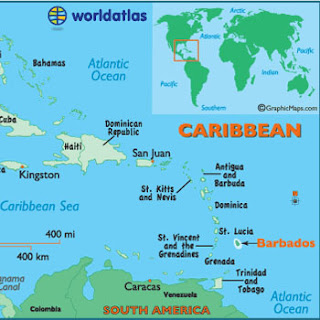
George 'Geordie' Graham, as he was known, was Afro-Caribbean and born between 1785 and 1790 in Grenada in the West Indies. His father had come to Glasgow as a coachman to one of the great West India merchants. He was accompanied by his wife and Geordie. Two daughters were mentioned later on, but, whether they were born in Grenada or Glasgow is uncertain. The family were, in all probability, the merchant's slaves and it is difficult to find their original names. The Abolition of Slavery Act was passed in 1807 by the British Parliament. The Act made it illegal to buy and sell enslaved people throughout the British Colonies. However, it did not end the use of enslaved labour across the British Empire. It wasn't until 1833, when the Slavery Abolition Act was passed, that abolition was wholly achieved.


The story goes that Geordie ran away and enlisted in the Royal Navy when he was a young lad and he remained there for many years. Later records show that George was a proficient drummer. The Royal Navy had ships' bands as did the Royal Marines, which operated under the authority of the Royal Navy, where drummers were more common.  

When he returned to Glasgow he found that both his father and mother were deceased. Two sisters, however, were still alive, but with these he had little correspondence.

Historian John D. Ellis says:
That a former soldier should descend into vagrancy was not uncommon; the end of the Napoleonic Wars (1793-1815) had seen thousands of British Army and Royal Navy veterans returned to "civvy street" at a time when Britain was a country in turmoil. Famine, unemployment, and civil unrest were rife. Veterans of battles like Trafalgar (1805) and Waterloo (1815) found their campaigns eulogised - whilst paradoxically they were left to fend for themselves (the "1824 Vagrancy Act" was, in part, passed as a response to former sailors and soldiers living on the streets or in make-shift camps).

So Geordie made the rural Ayrshire countryside his home, especially around Leadhills, New Cumnock and Old Cumnock. He was a vagrant, poorly clad, and he didn't appear to have any means to feed himself. He roamed alone during the day along the riverbanks and spent his nights under the shelter of the heat of one of the many pottery/brick kilns which were in active operation in the neighbourhood. Although he spoke English well he appeared to be unsociable and initially the villagers treated him with suspicion because of his ebony coloured skin.  However, they soon began to accept him. Three months later he disappeared, much to the puzzlement of the villagers, only to reappear the following summer, full of energy, to again roam the banks and channels of the rivers and he would sleep at the pottery/brick kilns and be supplied with food, usually by the local farmers.

He was reluctant to speak about his past life but was chatty about topical subjects which made him popular with the locals. He would disappear again without warning and then reappear for a three month spell. The villagers were puzzled over Geordie's odd behaviour but eventually his secret was discovered. 

Geordie was gathering pebbles from the channels in the rivers and streams sometimes extending his search to Carsphairn and Galston. These were not ordinary pebbles. They were jasper stones, a type of quartz, which came in many colours and patterns. He would use a large freestone at a nearby meal mill which would grind his pebbles into shape and, by applying emery afterwards, would produce a polish which made the stones more valuable. He would sell these semi-precious stones for as much as £15 each in nearby cities.


Scottish Red Jasper which is thought to increase strength, energy, stamina, focus and determination. It was known as "the warrior's stone" or "the stone of endurance" 


He also found employment where he could. He was in the service of Mr. Ferguson of Dinmurchie, Barr and for a while lived in Old Cumnock where he worked in the Cumnock Pottery.

Pottery Row - CHG Banks & Bankers, Shops & Inhabitants, Cumnock Chronicle & Jack Hill 1961


Leadhills Village 

The sale of the stones gave Geordie some stability and he eventually moved into a house of his own where he could spend the summer and the winter. He had a very fierce-looking bulldog, which was always by his side. It went by the name of 'Ready' which was the signal given by Royal Navy gun crews when they were prepared to fire. I'm surmising that the village he chose to settle in was Leadhills where there was a brass band. Geordie took a keen interest in it and would march alongside them. One day the drummer asked Geordie if he would like to use the drumsticks to beat the drum. Geordie replied that he would like to have the drum too. Hoping to have a laugh at Geordie's expense the drummer complied but was taken by surprise when Geordie expertly fitted himself out with the big drum. The leader asked Geordie which tune he would prefer. He replied  'the 4th Dragoon's March'. Geordie gave three taps and the band struck in. The tone was superior to anything they had heard before and was executed to perfection. 

Off they marched causing a sensation in the village. One of the onlookers asked Geordie where he had learned to beat the drum. His only answer was that he had paid for his learning. Choosing to play 'the 4th Dragoon's March' was perhaps a clue to one of the regiments Geordie had served in. 

Historian John D. Ellis says:
'The duty of an army drummer was to beat out the drum patterns issued by his commanders to communicate orders to soldiers.' and Geordie had displayed this skill. 

In 1832 there were celebrations in towns and cities across Scotland following the passing of the Reform Act. The Leadhills Brass Band were invited to perform. They walked from Leadhills Village to Sanquhar, which was about seven miles, to get there on time with 'Big Black Geordie from Dalgig beating the drum'. 

In July 1844 there was a festival in Ayr and the band were to play. Geordie loved bright colours and a local landowner presented him with a full suit of his native African dress to wear.

In 1841 George Graham is living at Dalgig Farm, New Cumnock and is employed as a manservant. The farmer is Ivie Campbell. He was a very kind man. Any tramp passing through, if he said his name was Campbell, was certain of porridge and milk. Hungry Irish travellers searching for work and a place to stay could always rest for a few days at Dalgig until they regained their strength.


Geordie's chosen surname was Graham. What his birth name was nobody seems to know. It's interesting to note that Ivie Campbell's brother-in-law, who was married to Ivie's sister Isabel, was William Graham from Marchburn Farm, New Cumnock. He was in the Dragoon Guards and was discharged in 1802. Geordie's chosen tune to play on the drums was 'the 4th Dragoon's March'. Did Geordie serve with William Graham or did Ivie hold a special affection for him because he was, like Ivie's brother-in-law, a veteran? Perhaps one of these reasons why George chose Graham as his surname. 

In 1851 Geordie is at Dalgig working as a farm labourer and in 1861 he is working there as a groom. 


Geordie took an active part in farm life and regularly accompanied the Campbells to their frequent shows.


Cumnock Chronicle 1902


Geordie died of cramp of the stomach, after one day, at Dalgig, New Cumnock on 2nd May 1868. The informant was Mr Ivie Campbell. Geordie was aged 78 years and single. His parents names were not given


Sources:
Irvine Times 22/5/1885
Lanarkshire Upper Ward Examiner 6/2/1886
Ayrshire Weekly News 26/2/1886
Black Soldiers and Edinburgh 1792-1848 by John D. Ellis
Historical Roots - "Few men are better remembered. Black Geordie:
                               George Graham of Dalgig, Ayrshire" by John D. Ellis