"Few men are better remembered. Black Geordie: George Graham of Dalgig" - John D. Ellis
by Roberta McGee
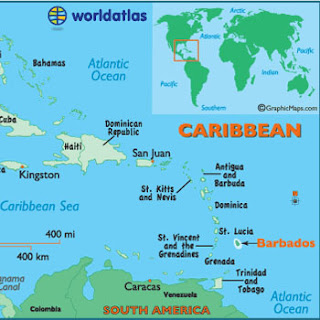
George 'Geordie' Graham, as he was known, was Afro-Caribbean and born between 1785 and 1790 in Grenada in the West Indies. His father had come to Glasgow as a coachman to one of the great West India merchants. He was accompanied by his wife and Geordie. Two daughters were mentioned later on, but, whether they were born in Grenada or Glasgow is uncertain. The family were, in all probability, the merchant's slaves and it is difficult to find their original names. The Abolition of Slavery Act was passed in 1807 by the British Parliament. The Act made it illegal to buy and sell enslaved people throughout the British Colonies. However, it did not end the use of enslaved labour across the British Empire. It wasn't until 1833, when the Slavery Abolition Act was passed, that abolition was wholly achieved.
 |
The story goes that Geordie ran away and enlisted in the Royal Navy when he was a young lad and he remained there for many years. Later records show that George was a proficient drummer. The Royal Navy had ships' bands as did the Royal Marines, which operated under the authority of the Royal Navy, where drummers were more common.
When he returned to Glasgow he found that both his father and mother were deceased. Two sisters, however, were still alive, but with these he had little correspondence.
Historian John D. Ellis says:
That a former soldier should descend into vagrancy was not uncommon; the end of the Napoleonic Wars (1793-1815) had seen thousands of British Army and Royal Navy veterans returned to "civvy street" at a time when Britain was a country in turmoil. Famine, unemployment, and civil unrest were rife. Veterans of battles like Trafalgar (1805) and Waterloo (1815) found their campaigns eulogised - whilst paradoxically they were left to fend for themselves (the "1824 Vagrancy Act" was, in part, passed as a response to former sailors and soldiers living on the streets or in make-shift camps).
So Geordie made the rural Ayrshire countryside his home, especially around Leadhills, New Cumnock and Old Cumnock. He was a vagrant, poorly clad, and he didn't appear to have any means to feed himself. He roamed alone during the day along the riverbanks and spent his nights under the shelter of the heat of one of the many pottery/brick kilns which were in active operation in the neighbourhood. Although he spoke English well he appeared to be unsociable and initially the villagers treated him with suspicion because of his ebony coloured skin. However, they soon began to accept him. Three months later he disappeared, much to the puzzlement of the villagers, only to reappear the following summer, full of energy, to again roam the banks and channels of the rivers and he would sleep at the pottery/brick kilns and be supplied with food, usually by the local farmers.
He was reluctant to speak about his past life but was chatty about topical subjects which made him popular with the locals. He would disappear again without warning and then reappear for a three month spell. The villagers were puzzled over Geordie's odd behaviour but eventually his secret was discovered.
Geordie was gathering pebbles from the channels in the rivers and streams sometimes extending his search to Carsphairn and Galston. These were not ordinary pebbles. They were jasper stones, a type of quartz, which came in many colours and patterns. He would use a large freestone at a nearby meal mill which would grind his pebbles into shape and, by applying emery afterwards, would produce a polish which made the stones more valuable. He would sell these semi-precious stones for as much as £15 each in nearby cities.
 |
| Scottish Red Jasper which is thought to increase strength, energy, stamina, focus and determination. It was known as "the warrior's stone" or "the stone of endurance" |
He also found employment where he could. He was in the service of Mr. Ferguson of Dinmurchie, Barr and for a while lived in Old Cumnock where he worked in the Cumnock Pottery.
 |
| Pottery Row - CHG Banks & Bankers, Shops & Inhabitants, Cumnock Chronicle & Jack Hill 1961 |
 |
| Leadhills Village |
The sale of the stones gave Geordie some stability and he eventually moved into a house of his own where he could spend the summer and the winter. He had a very fierce-looking bulldog, which was always by his side. It went by the name of 'Ready' which was the signal given by Royal Navy gun crews when they were prepared to fire. I'm surmising that the village he chose to settle in was Leadhills where there was a brass band. Geordie took a keen interest in it and would march alongside them. One day the drummer asked Geordie if he would like to use the drumsticks to beat the drum. Geordie replied that he would like to have the drum too. Hoping to have a laugh at Geordie's expense the drummer complied but was taken by surprise when Geordie expertly fitted himself out with the big drum. The leader asked Geordie which tune he would prefer. He replied 'the 4th Dragoon's March'. Geordie gave three taps and the band struck in. The tone was superior to anything they had heard before and was executed to perfection.
Off they marched causing a sensation in the village. One of the onlookers asked Geordie where he had learned to beat the drum. His only answer was that he had paid for his learning. Choosing to play 'the 4th Dragoon's March' was perhaps a clue to one of the regiments Geordie had served in.
Historian John D. Ellis says:
'The duty of an army drummer was to beat out the drum patterns issued by his commanders to communicate orders to soldiers.' and Geordie had displayed this skill.
In 1832 there were celebrations in towns and cities across Scotland following the passing of the Reform Act. The Leadhills Brass Band were invited to perform. They walked from Leadhills Village to Sanquhar, which was about seven miles, to get there on time with 'Big Black Geordie from Dalgig beating the drum'.
In July 1844 there was a festival in Ayr and the band were to play. Geordie loved bright colours and a local landowner presented him with a full suit of his native African dress to wear.
In 1841 George Graham is living at Dalgig Farm, New Cumnock and is employed as a manservant. The farmer is Ivie Campbell. He was a very kind man. Any tramp passing through, if he said his name was Campbell, was certain of porridge and milk. Hungry Irish travellers searching for work and a place to stay could always rest for a few days at Dalgig until they regained their strength.

Geordie's chosen surname was Graham. What his birth name was nobody seems to know. It's interesting to note that Ivie Campbell's brother-in-law, who was married to Ivie's sister Isabel, was William Graham from Marchburn Farm, New Cumnock. He was in the Dragoon Guards and was discharged in 1802. Geordie's chosen tune to play on the drums was 'the 4th Dragoon's March'. Did Geordie serve with William Graham or did Ivie hold a special affection for him because he was, like Ivie's brother-in-law, a veteran? Perhaps one of these reasons why George chose Graham as his surname.
In 1851 Geordie is at Dalgig working as a farm labourer and in 1861 he is working there as a groom.

Geordie took an active part in farm life and regularly accompanied the Campbells to their frequent shows.
 |
| Cumnock Chronicle 1902 |
Geordie died of cramp of the stomach, after one day, at Dalgig, New Cumnock on 2nd May 1868. The informant was Mr Ivie Campbell. Geordie was aged 78 years and single. His parents names were not given
Sources:
Irvine Times 22/5/1885
Lanarkshire Upper Ward Examiner 6/2/1886
Ayrshire Weekly News 26/2/1886
Black Soldiers and Edinburgh 1792-1848 by John D. Ellis
Historical Roots - "Few men are better remembered. Black Geordie:
George Graham of Dalgig, Ayrshire" by John D. Ellis


